
How Political Messaging Can Move Bitcoin Markets
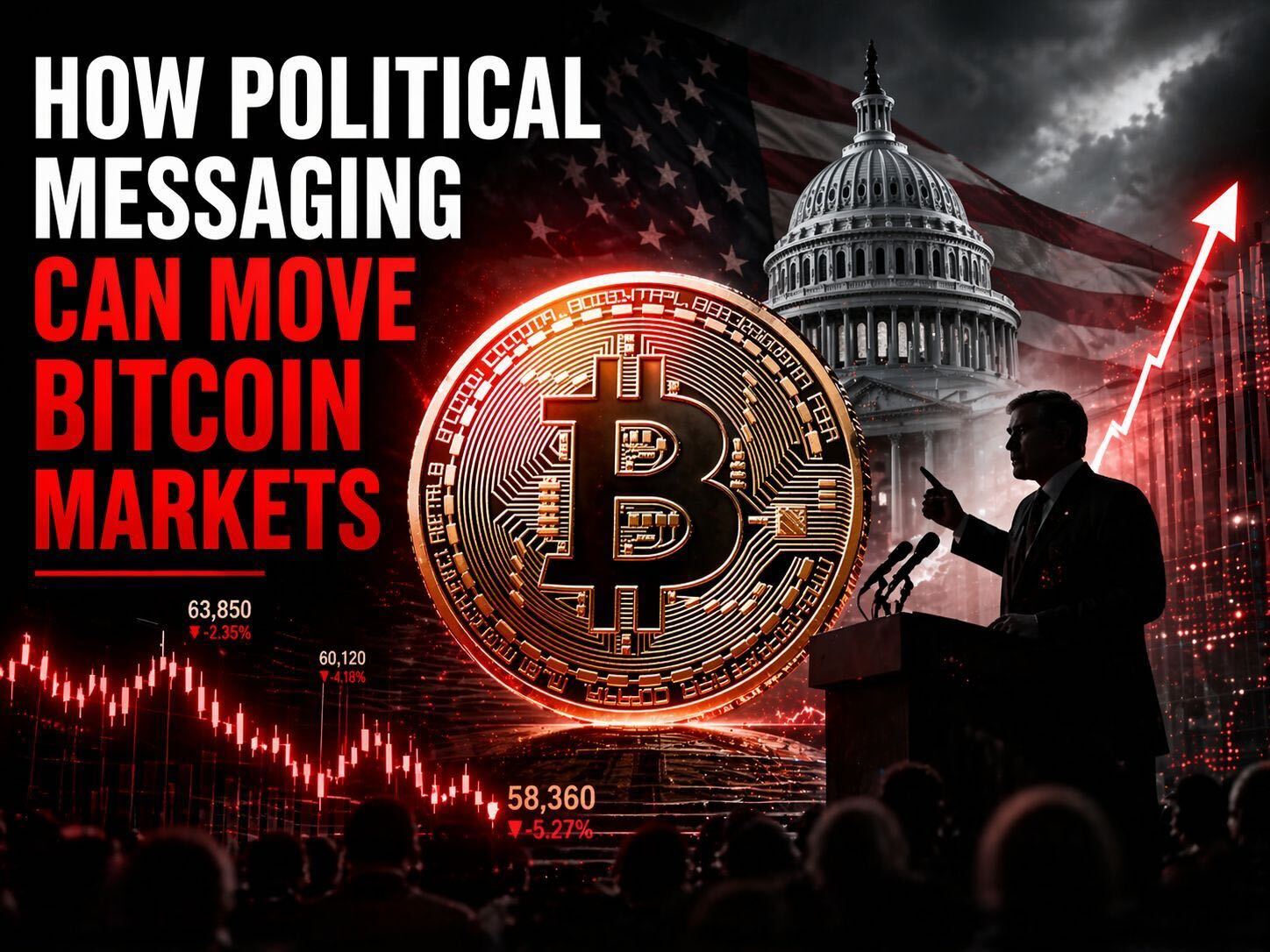
Bitcoin is often described as independent from traditional systems.
In practice, it still reacts to them.
Recent analysis highlights how political messaging, including statements from high-profile figures like President Trump, can trigger short-term volatility across crypto markets.
Markets React Quickly to Public Statements
Cryptocurrency markets operate 24/7 and respond in real time to new information.
That includes:
- Policy announcements
- Economic signals
- Social media posts from influential figures
Because there is no market close, reactions can happen within minutes. This makes crypto particularly sensitive to unexpected headlines, especially those tied to economic or regulatory policy.
Historical Examples of Market Reactions
There are clear examples where public statements have coincided with rapid market moves.
In July 2019, Bitcoin dropped sharply after a widely circulated statement criticizing cryptocurrencies. More recently, market reactions have followed posts and announcements tied to trade policy and broader economic positioning.
These types of moves are not unique to crypto. Traditional markets also react to political communication, but crypto’s volatility and constant trading amplify the effect.
Why Bitcoin Is More Sensitive
Several factors make Bitcoin especially reactive:
- 24/7 trading – no pause for information to be absorbed
- Global participation – reactions happen across time zones instantly
- High volatility – smaller shifts in sentiment can move price quickly
- Macro linkage – policy changes affect liquidity, rates, and risk appetite
Together, these create an environment where headlines can translate into price movement faster than in traditional markets.
Policy Signals Matter More Than Opinions
Not all statements carry equal weight.
Markets tend to react more strongly when messaging is tied to potential policy changes, such as:
- Tariffs
- Regulation
- Monetary or fiscal direction
These signals affect expectations around inflation, liquidity, and economic growth, all of which influence risk assets like Bitcoin.
The Role of Market Expectations
It is important to separate correlation from causation.
Markets do not move simply because of a statement. They move because that statement changes expectations.
For example:
- A shift toward tighter policy can pressure risk assets
- Signals of economic support can boost sentiment
In many cases, the reaction is less about the message itself and more about what it implies.
Volatility Is Not Unique to Crypto
While Bitcoin may appear especially reactive, similar patterns exist in traditional markets.
Equities, commodities, and currencies often move on political headlines, particularly during periods of uncertainty. The difference is that crypto tends to move faster and with larger percentage swings.
That does not necessarily indicate manipulation.
It reflects market structure.
Big Picture: Bitcoin Is Still Tied to Macro Forces
Despite narratives around independence, Bitcoin remains connected to broader financial and political systems.
Policy decisions, economic outlook, and global events all play a role in shaping market behavior.
As more institutional capital enters the space, these connections may become even more pronounced, not less.
Conclusion
Bitcoin does not exist in a vacuum.
Political messaging, especially when tied to policy, can influence market sentiment and trigger short-term volatility. In a 24/7, globally traded market, those reactions can happen quickly and at scale.
The key takeaway is not that individual statements control the market.
It is that expectations, driven by policy signals, continue to shape how Bitcoin trades.