
Vancouver Mayor’s Bitcoin Treasury Proposal Blocked by City Legal Review
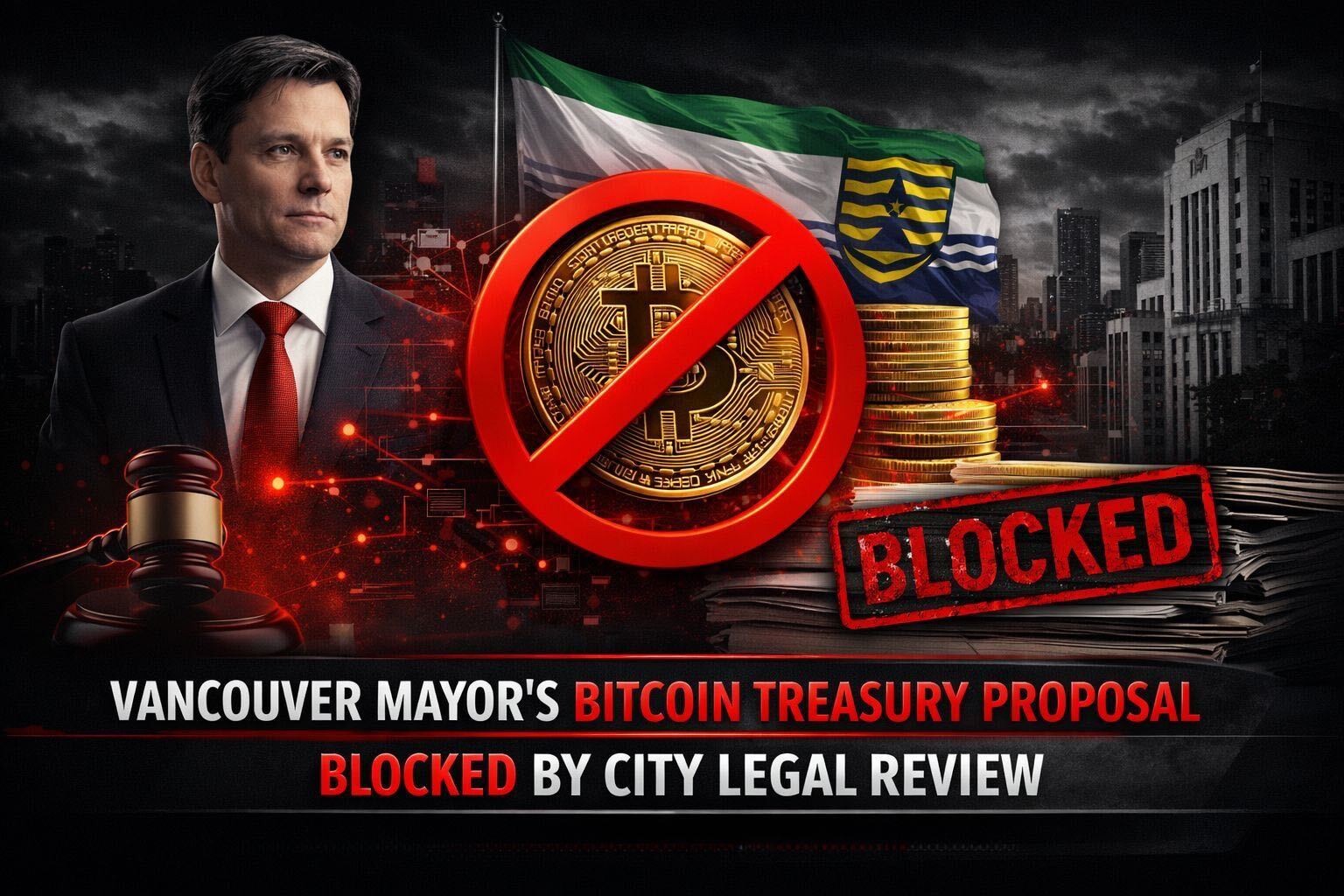
Vancouver Mayor Ken Sim’s proposal to explore holding bitcoin as part of the city’s reserves has been halted after municipal staff determined that current laws do not permit cryptocurrency investments.
A legal review found that Vancouver’s investment rules, governed by the Vancouver Charter and provincial legislation tied to British Columbia’s Municipal Finance Authority, restrict the city to a narrow set of approved financial assets.
City staff concluded that bitcoin does not qualify under the existing framework, effectively preventing the municipality from adding cryptocurrency to its treasury holdings.
Municipal Investment Rules Leave Little Flexibility
Under current rules, Vancouver is permitted to invest public funds only in low-risk financial instruments such as:
- Federal and provincial government securities
- Municipal bonds
- Deposits with Canadian banks and credit unions
- Highly rated short-term commercial paper
These restrictions are designed to prioritize capital preservation and liquidity for taxpayer funds.
Because digital assets are not listed among allowable instruments, staff determined the city does not have the authority to purchase or hold bitcoin as an investment.
Idea Was Part of a Broader “Bitcoin-Friendly” Vision
Mayor Sim had previously expressed interest in positioning Vancouver as a city open to digital asset innovation.
The proposal was intended to explore whether the city could hold bitcoin in a manner similar to some corporations and institutional investors that have added cryptocurrency to their balance sheets.
However, municipal governments operate under significantly stricter investment rules than private companies, which limits the range of assets they can hold.
Possible Alternative: Payment Acceptance
While the treasury investment concept has been blocked, another possibility remains under discussion, whether the city could accept bitcoin for municipal services if it were immediately converted into Canadian dollars.
Some governments and companies already use third-party payment processors that allow cryptocurrency payments while avoiding direct exposure to price volatility.
No decision has been announced on whether Vancouver will explore that option.
Broader Implications
The outcome highlights a structural challenge facing municipal governments interested in digital assets.
Many investment laws governing public funds were written decades before cryptocurrencies existed, leaving little room for new asset classes without legislative updates.
For Canadian municipalities, any change allowing bitcoin treasury holdings would likely require amendments at the provincial level or revisions to municipal finance rules.
Looking Ahead
For now, Vancouver’s investment policies remain unchanged, and bitcoin cannot be added to the city’s reserves.
The episode illustrates the growing tension between rapidly evolving financial technologies and regulatory frameworks designed for a much earlier era of finance.
Whether governments ultimately update those frameworks may determine how, or if, municipalities participate in the digital asset economy in the future.