
Bitcoin Regulation Takes Center Stage as CLARITY Act Faces Key Senate Vote
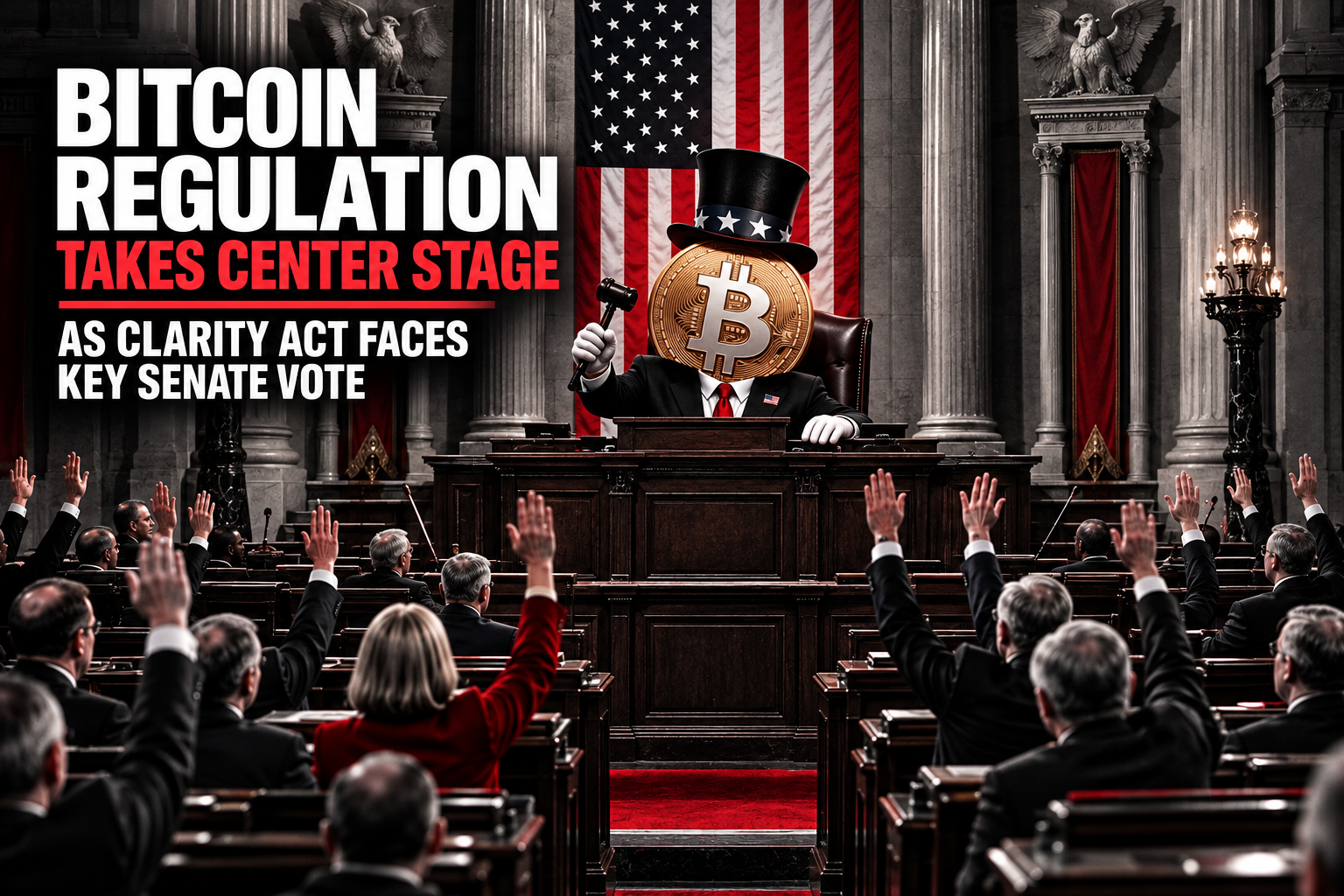
Bitcoin regulation in the United States takes center stage Tuesday as the Senate prepares for a key procedural vote on the CLARITY Act, legislation designed to establish a federal regulatory framework for cryptocurrencies and other digital assets.
After months of negotiations, the bill needs 60 votes to advance in the Senate.
What Is the CLARITY Act?
The CLARITY Act is designed to establish federal rules for Bitcoin, cryptocurrencies and the wider U.S. digital asset industry.
The legislation addresses how securities and commodities laws apply to digital assets and establishes responsibilities for federal regulators, including the Securities and Exchange Commission (SEC) and Commodity Futures Trading Commission (CFTC).
For Bitcoin businesses, this directly addresses one of the industry’s biggest regulatory issues: establishing defined federal rules and clearer responsibilities between major regulators.
Why Tuesday’s Senate Vote Matters for Bitcoin
Tuesday’s vote is procedural rather than a vote on final passage.
Senators are voting on whether to advance consideration of the CLARITY Act. The legislation needs 60 votes to overcome a filibuster. With full Senate attendance, at least seven Democrats would need to join Republicans for the measure to advance.
If it advances, senators can continue considering and amending the legislation before a later vote on final passage.
For Bitcoin, the vote also represents another major step in its integration into the U.S. regulatory system. Congress is actively considering legislation that specifically establishes how digital asset markets and businesses operate under federal law.
Stablecoins and Ethics Remain Key Issues
One of the major disagreements involves stablecoins.
Banking groups have raised concerns that interest-like stablecoin rewards could move deposits away from traditional financial institutions. The latest version of the legislation directs the Treasury secretary to restrict stablecoin rewards if deposit flight from community banks occurs on a substantial scale.
Political ethics are another major part of negotiations. Democrats have pushed for stronger restrictions covering federal officials and their families who have financial interests in crypto ventures.
Updated legislation released Sunday incorporates portions of an ethics agreement negotiated by Sens. Thom Tillis and Ruben Gallego, including a provision allowing state attorneys general to enforce certain ethics requirements involving federal officials.
Why This Matters for Bitcoin
The CLARITY Act puts Bitcoin and digital assets directly into the conversation over the future structure of U.S. financial regulation.
For the Bitcoin industry, establishing defined federal rules provides companies with a clearer framework for operating in the United States. The legislation also defines regulatory responsibilities between the SEC and CFTC, addressing an issue that has been central to U.S. digital asset policy.
It also demonstrates how far Bitcoin has moved into mainstream U.S. financial policy. Bitcoin and digital asset markets are now the subject of dedicated legislation being debated at the highest levels of Congress.
Conclusion
Bitcoin regulation is back in focus in Washington as the CLARITY Act reaches a key Senate vote Tuesday.
The legislation needs 60 votes to advance, with Democratic support required if all senators are present. Lawmakers remain divided over stablecoin provisions and ethics requirements as the crypto and banking industries continue lobbying over the bill.
For Bitcoin, the legislation represents a significant effort to establish defined federal rules for an industry that has become an established part of the U.S. financial system.
Tuesday’s procedural vote will determine whether that effort moves forward in the Senate.